How Will the 2026 Super El Niño Impact Texas?
2 minute readWhat does El Niño mean for Texas? The transition to a Super El Niño in 2026 is expected to impact

3 minute read • Last update April 2026
Climate scientists are expecting the 2026 Atlantic hurrican season to bring “below-normal” activity with 13 named storms, 6 hurricanes, and 2 major hurricanes. This forecast is much lighter than last year’s.
On April 9th of 2026, the Colorado State University Tropical Weather & Climate Research team released its forecast for the 2026 Atlantic hurricane season.
CSU researcheds predict13 named tropical storms or hurricanes. A named storm refers to on that has a reached a development stage with sustained winds of at least 39 miles per hour. Of those 13 storm, they predict 6 will reach hurricane status and 2 will reach major hurricane status. A major hurricane is at least category 3 with sustained winds of 111 miles per hour or more.
| Category | Number of Storms Predicted in 2026 |
|---|---|
| Named Storms | 13 |
| Hurricanes | 6 |
| Major Hurricanes | 2 |
The 2026 hurricane season for the Atlantic begins on June 1st.
The 2026 Atlantic hurricane season ends on November 30th.
There are two main drivers highlighted by researchers and scientists in their prediction for 13 named storms during the 2026 Atlantic hurricane season: a robust El Niño and mixed signals from sea surface temperatures in the Atlantic ocean.
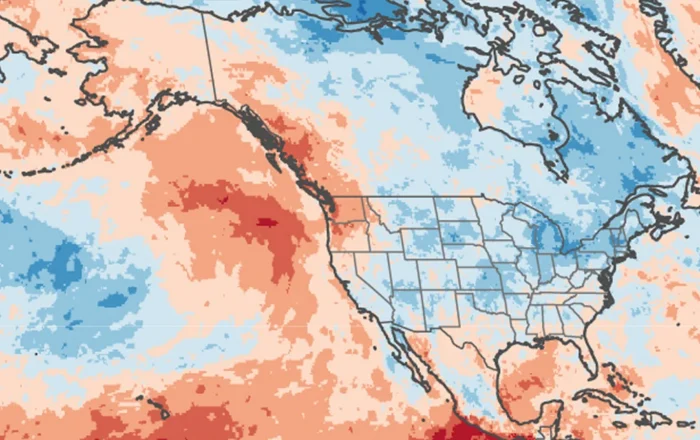
El Niño is a recurring climate pattern with warmer than normal water in the eastern and central tropical Pacific Ocean. When water in the eastern and central tropical Pacific are warmer than normal, this tends to increase upper-level westerly winds (winds that blow from the west to the east) across the Caribbean into the tropical Atlantic Ocean.
This type of west-blowing wind can cause increased vertical wind shear (a change in wind speed or direction with a change in altitude). High wind shear is detrimental to the formation of hurricanes because it breaks up a potential storm’s vertical structure. When the vertical structure of the storm is disrupted, the storm can be torn apart before it can develop into a hurricane.
To put it simply, warmer waters in the Pacific Ocean generally lead to winds that are unfavorable for the formation of hurricanes.
Weather scientists report warmer than normal sea surface temperatures in the western tropical Atlantic, but cooler than normal temperatures in the eastern tropical and subtropical Atlantic.
The warm waters in the western tropical Atlantic favor hurricane development because hurricanes need warm water to form. However, the cooler than normal seas in the eastern tropical and subtropical Atlantic can indicate below-normal activity.
Colorado State University researchers compared their 2026 forecast to the average data from hurricane seasons past.
The 2026 Atlantic hurricane season forecast is below the 1991-2020 average. The average has 14.4 named storms, 7.2 hurricanes, and 3.2 major hurricanes, while the 2026 forecast has only 13 named storms, 6 hurricanes, and 2 major hurricanes.
| Forecast Conditions | 2026 Prediction | Average (1991-2020) |
|---|---|---|
| Named Storms | 13 | 14.4 |
| Hurricanes | 6 | 7.2 |
| Major Hurricanes | 2 | 3.2 |
The April 2026 hurricane forecast from CSU also included predictions for where hurricanes strike land.
| Region | Region Description | 2026 | 2025 | 2024 | 1880-2020 |
|---|---|---|---|---|---|
| Entire U.S. Coastline | Entire U.S. Coastline | 32% | 51% | 62% | 43% |
| U.S. East Coast | Florida to Main | 15% | 26% | 34% | 26% |
| Gulf Coast | Texas to Florida | 20% | 33% | 42% | 27% |
Climate scientist predict a 20% chance that Gulf Coast of the United States, from Texas to Florida, will get hit by a hurricane in 2026. There is no guarantee that a hurricane will hit the state of Texas, but it is certainly possible.