Energy Saving Tips Home Improvement
How to Insulate Your Home for Winter in Texas
5 minute readReduce heat loss, improve comfort, and lower winter electricity costs

How to insulate an attic, what it costs, and how it reduces your electric bill
5 minute read • Last update February 2026
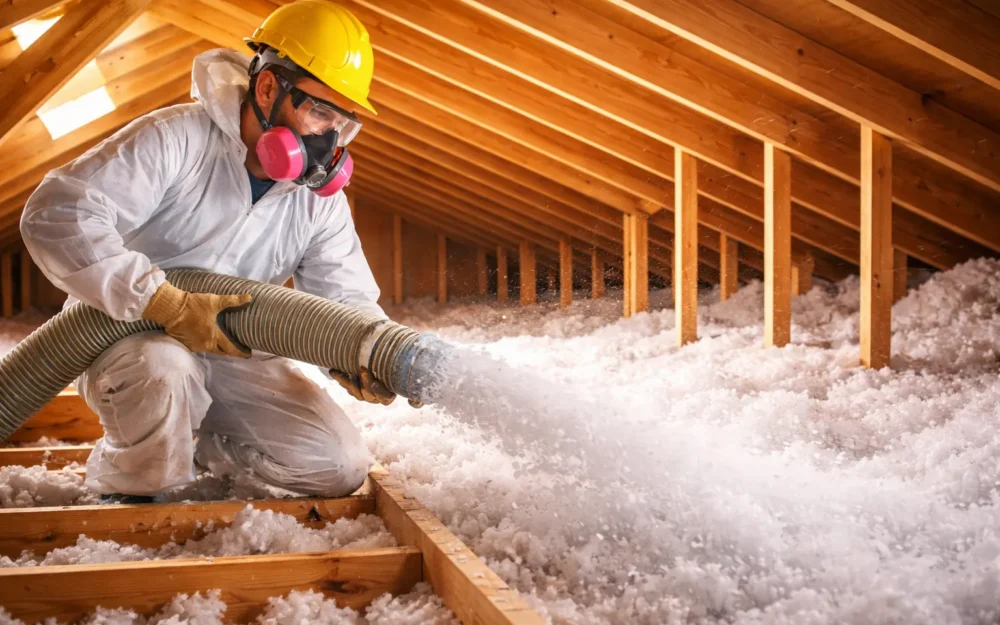
This guide explains how to insulate an attic in Texas and clearly breaks down cost, energy savings, and payback period so homeowners can decide if attic insulation is worth it.
Insulating an attic is one of the most effective ways to lower electricity costs in Texas. Long cooling seasons and extreme summer heat make attic insulation ROI in Texas significantly higher than the national average.
Here are the basics of attic insulation:
The most important step is the first step: air sealing.
If you already have insulation in your attic, evaluate its depth and installation quality.
After identifying your attic’s insulation needs, it’s time to get to work. This is usually best handled by an insulation professional.
Go above and beyond with the following steps:
Of course, remember to stay safe. Masks, goggles, gloves, and long sleeves are a must.
Attic insulation consistently ranks as one of the fastest payback home upgrades in Texas.
The average attic insulation cost typically falls between 1,500 and 4,500 dollars. Final cost depends on home size, insulation type, attic access, and existing insulation levels.
Most Texas homeowners see electricity bill reductions between 10 percent and 30 percent per year. The US Department of Energy notes that insulation and air sealing together can significantly reduce cooling costs in hot climates.
Comparing the initial cost and projected savings, the typical attic insulation payback period in Texas ranges from 2 to 5 years. Homes with older insulation or high summer usage often see even faster returns.
Texas specific ROI drivers include extreme summer heat, long cooling seasons, and high air conditioner runtime. Because cooling dominates annual electricity use, attic insulation delivers faster and more reliable financial returns than in cooler regions.
Knowing how to insulate an attic in Texas starts with proper R value selection.
Most Texas homes fall within climate zones 2 and 3. Recommended attic insulation levels generally range from R 38 to R 49. Higher R values slow heat transfer from the roof into living spaces during peak summer months.
Texas roof design also matters. Dark shingles, low roof pitch, and limited attic ventilation increase radiant heat gain. These conditions make proper insulation depth and coverage especially important.
Adding insulation means installing new material on top of existing insulation when it is dry and uncontaminated. Replacing insulation is necessary when old material is compressed, moldy, or damaged by pests.
Air sealing should always happen before adding insulation. Sealing attic penetrations around ducts, wiring, and ceiling fixtures prevents conditioned air from escaping into the attic.
Common mistakes that reduce attic insulation ROI include uneven coverage, blocking soffit vents, and skipping air sealing. These issues limit performance even when the insulation thickness looks adequate.
Attic insulation saves energy by slowing heat transfer into the home. In Texas, radiant heat from roofing systems is a major contributor to indoor temperature gain.
Without sufficient insulation, attic temperatures can exceed outdoor air temperatures by a wide margin. This heat pushes downward into living spaces, forcing air conditioners to run longer and harder.
Improved insulation reduces air conditioner runtime, lowers peak electricity usage, and stabilizes indoor temperatures. The result is fewer temperature swings and less strain on cooling equipment.
Hot climate states see outsized insulation ROI because cooling loads dominate annual usage. Every unit of heat blocked at the attic level directly reduces electricity consumption during the most expensive billing months.
Attic insulation cost in Texas varies by material and installation method.
Blown-in fiberglass typically ranges from 1 to 2 dollars per square foot. Cellulose insulation usually costs slightly more but offers higher density and better resistance to air movement.
Spray foam insulation carries the highest upfront cost. Open-cell foam is less expensive and commonly used in Texas attics, while closed-cell foam costs more but adds moisture resistance and structural benefits.
Factors that materially affect cost include existing insulation condition, attic accessibility, home age, and framing design. Older homes with tight or low clearance attics tend to cost more to insulate.
Viewed as a capital investment, attic insulation provides measurable utility savings that continue year after year.
Different insulation types (fiberglass, cellulose, and spray foam) deliver different ROI profiles.
Blown-in insulation has the lowest installation cost and a solid lifespan, making it a strong choice for fast payback. Energy savings are meaningful when coverage is uniform and air leaks are sealed.
Spray foam has a higher upfront cost but a longer lifespan and superior air sealing performance. In homes with ductwork located in the attic, spray foam can deliver stronger lifetime returns.
Higher cost insulation options make financial sense when cooling usage is high, ducts are in unconditioned spaces, or long-term occupancy is planned.
The attic insulation payback period is a straightforward cash flow calculation.
Payback period in years equals total attic insulation cost divided by annual electricity cost savings.
Total attic insulation cost includes materials and installation. Annual electricity cost savings equal the pre-insulation annual electricity bill minus the post-insulation annual electricity bill.
For estimation purposes, annual electricity cost savings can also be calculated by multiplying the annual kilowatt-hour reduction by the electricity rate per kilowatt-hour.
Because Texas electricity usage peaks during summer, higher warm season consumption shortens payback timelines. This metric reflects financial return only and does not account for comfort improvements or equipment longevity.
Savings vary based on home size and starting conditions.
Small homes often save several hundred dollars per year after proper attic insulation. Average suburban Texas homes frequently see savings in the mid-hundreds annually.
Large or poorly insulated homes can experience dramatic reductions, especially during peak summer months when cooling costs dominate.
Because savings are weighted toward summer usage, attic insulation reduces exposure to the most expensive billing periods. This makes year-to-year electricity costs more predictable.
Attic insulation reduces how much electricity a home needs, but the final ROI still depends on the rate paid per kilowatt hour.
In Texas, summer cooling drives most annual usage. Pairing insulation with a low fixed rate electricity plan materially increases total savings and shortens the effective payback period.
Lower energy consumption combined with a predictable rate creates a compounding benefit. Insulation reduces overall usage while a fixed rate stabilizes cost per unit. Together, they reduce exposure to summer price volatility and high bill months.
If you have invested in attic insulation or are evaluating the ROI, comparing fixed rate electricity plans built for long term stability helps ensure those efficiency gains turn into real bill savings season after season.