
10 Reasons to Switch to BKV Energy
2 minute readLooking for a new Texas electricity provider? Here are 10 reasons to choose BKV Energy’s Bluebonnet plan to power your

Reduce heat loss, improve comfort, and lower winter electricity costs
6 minute read • Last update February 2026
Looking to enhance your home’s insulation during the winter? These are the best ways to keep your home warm when it’s cold outside.
These actions reduce heat loss immediately, lower electricity usage during cold snaps, and improve your indoor comfort.
Texas homes are often built for cooling efficiency first. After all, it is hot for most of the year.
But when winter inevitably arrives, and temperatures drop, heat escapes quickly through attics, doors, windows, and small structural gaps. Strengthening insulation in the right places helps your heating system work less, keeps indoor temperatures stable, and reduces winter electricity costs.
In this guide, you’ll learn where Texas homes lose the most heat in winter, which insulation improvements deliver the fastest results, and how winter home insulation directly lowers electricity usage and monthly bills.
Experts recommend the following solutions for attic insulation:
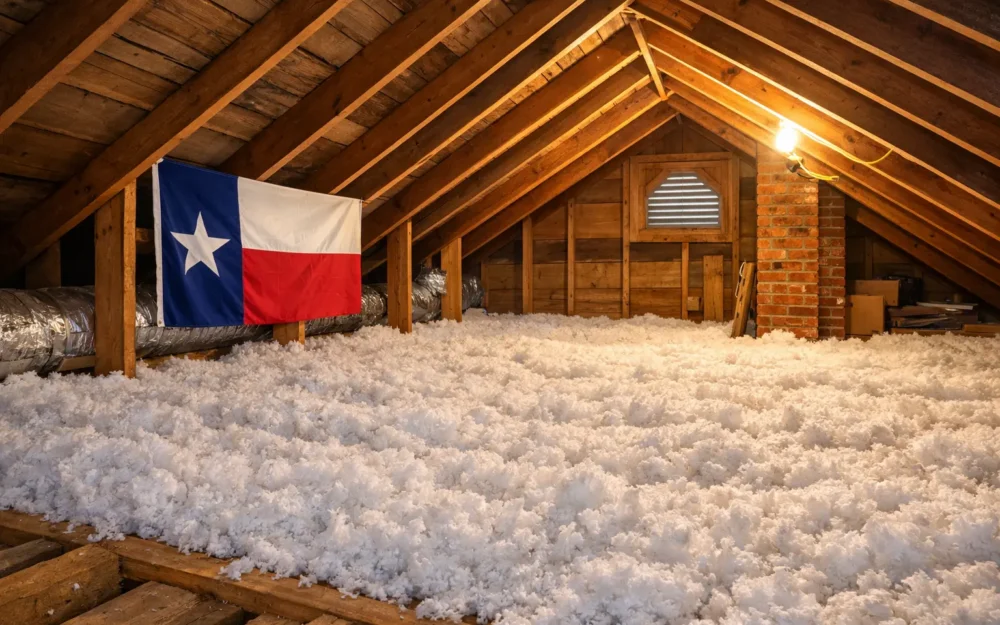
Attic insulation often delivers the highest return on investment because it targets the biggest escape point for indoor heat. The attic is the single largest source of heat loss in most homes. Because heat rises, warm indoor air naturally escapes upward.
If attic insulation is thin, uneven, or aging, your heater has to run longer to maintain comfort. This added strain increases electricity usage and creates noticeable temperature differences between rooms.
Many Texas homes technically meet minimum building code requirements, but that does not always translate to strong winter performance. As insulation ages or shifts over time, it becomes less effective at trapping heat. This causes heating systems to cycle more frequently, which can drive up monthly energy costs.
It is also important to understand the difference between insulation coverage and air sealing.
Homeowners may want to consider a professional evaluation if they notice uneven indoor temperatures, frequent heater cycling, or unexpected increases in winter electricity bills.
For readers who want to learn more about different insulation materials and how they perform, our guide on types of insulation provides a helpful overview without overlapping with the placement strategies discussed here.
Air leaks can undermine even well-insulated homes. Small gaps around doors, windows, and structural openings allow warm air to escape and cold air to enter.
Fixing these leaks is often one of the most affordable ways to improve winter home insulation and quickly increase comfort.
Sealing doors and windows is one of the fastest ways to reduce heat loss. Weatherstripping can help stop drafts around door frames, while door sweeps can block cold air that enters at floor level. These improvements are low-cost, easy to install, and work well for both homeowners and renters.
Gaps around plumbing, electrical lines, and wall penetrations are another common source of hidden air leaks. Applying caulk or foam sealant in these areas helps keep warm air inside and cold air out. Even small openings can increase heating demand, so addressing them early can make a noticeable difference in both comfort and electricity usage.
Even homes that feel comfortable during the day can lose heat quickly overnight. Identifying the most common problem areas helps homeowners prioritize insulation improvements that deliver real results.
These are the areas most responsible for heat loss:
Not every homeowner wants to take on a large insulation project. Fortunately, several smaller improvements can still make a noticeable difference in comfort and efficiency.
Thermal curtains can help trap warm air indoors and reduce heat transfer through windows. Window insulation kits add another layer of protection by limiting drafts. Door draft blockers provide a simple way to reduce cold air entering at the base of doors. Sealing visible cracks and small openings can also help maintain consistent indoor temperatures.
Looking for even more affordable ways to insulate your home during the winter? Here are some ways to insulate the home for winter with items you may already have around the house.
Winter home insulation directly impacts how much electricity your heating system uses. When a home holds heat effectively, heaters run less often, and indoor temperatures stay more consistent. This reduces strain on your system and helps prevent sudden spikes in energy usage during cold weather.
During winter demand periods, electricity usage often increases across Texas. Homes with strong insulation require less energy to maintain comfort, which helps keep monthly bills more predictable. These are a few of the many ways to lower energy costs during colder months that can help you save money this winter.
Insulation is not just about comfort. It plays a direct role in controlling monthly electricity expenses. When heat stays inside longer, heating systems do not need to run as frequently. This leads to lower overall energy usage and helps reduce strain during high-demand periods.
Even modest insulation improvements can have a noticeable effect on winter energy costs. By limiting heat loss, homes can maintain temperature more efficiently, which leads to steadier energy consumption and fewer unexpected bill increases.
Insulation helps reduce how much electricity you use, but your electricity plan determines how much you pay for that energy. During cold weather, demand increases statewide, which can lead to higher costs depending on your rate structure.
Combining strong insulation with a stable electricity plan gives homeowners more control over their winter energy expenses. Insulation helps lower usage, while a predictable rate helps manage the cost of the electricity you still need.
Improving insulation is one of the most effective ways to reduce heat loss and lower winter electricity usage. Pairing those improvements with a fixed-rate electricity plan adds another layer of protection.
BKV Energy offers fixed-rate electricity plans designed to help Texans avoid winter price surprises. With transparent pricing and predictable monthly rates, customers can better plan their energy costs while staying comfortable through the cold season. When your home holds heat more efficiently and your electricity rate stays consistent, winter bills become easier to manage and easier to plan for.