
10 Reasons to Switch to BKV Energy
2 minute readLooking for a new Texas electricity provider? Here are 10 reasons to choose BKV Energy’s Bluebonnet plan to power your

Ceiling fans use less electricity than air conditioners, offering an efficient, low-cost way to stay cool year-round in Texas
5 minute read • Last update August 2026
KEY TAKEAWAYS
The typical ceiling fan uses between 15-100 watts of electricity, depending on the size of the fan and how quickly the blades are rotating.
At an average price of 12 cents per kWh and a usage of 8 hours per day, a 50-watt ceiling fan would cost about $1.44 per month or around $17.28 per year.
How to use the ceiling fan calculator:
The typical ceiling fan uses between 15 and 100 watts, depending on its size and operating speed:
Larger blade size, airflow (measured in cubic feet per minute or CFM), and rotations per minute (RPM) will proportionally increase wattage.
To translate wattage into electricity consumption, we need to factor in time. By multiplying the watts by the number of hours a fan operates, then dividing by 1,000, we can calculate the kilowatt hours consumed by a ceiling fan.
Here's an example of how to calculate the kWh used by a ceiling fan.
Now that we know how to calculate the monthly energy consumption of a ceiling fan, we can apply the cost of electricity to determine the cost to operate a ceiling fan.
Let's assume a cost per kWh of 12¢/kWh and 0.4 kWh/day:
A ceiling fan costs less than $2 per month and less than $20 per year if you run it daily for 8 hours each day.
That's a very cost-effective way to keep cool, especially compared to the cost of air conditioning.
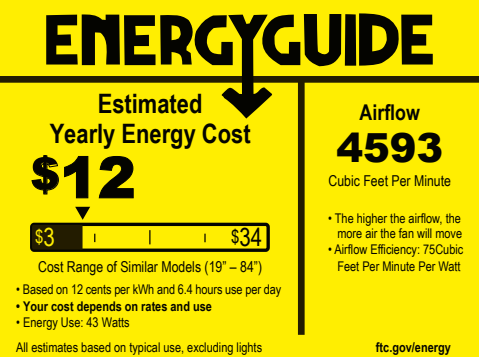
Before you purchase a ceiling fan, you can also find the estimated operation cost on the Energy Guide label.
Let's compare the cost of a ceiling fan to other cooling methods:
Running a ceiling fan is drastically cheaper than operating any air conditioner.
Larger fans with energy-efficient DC motors consume significantly less electricity than older AC motor models. ENERGY STAR® fans can use up to 60% less energy.
Higher speeds consume more watts. Extended use — especially at top speeds — compounds energy consumption. Using medium or low settings maximizes efficiency.
Incorrect seasonal settings can negate energy savings. It is important to follow the guidance above to maximize the value you receive from running your fan.
Higher ceilings and larger rooms require more airflow (CFM), demanding higher fan speeds and wattage. Choosing the right fan size for the space is critical for minimizing unnecessary energy use.
To calculate your fan’s energy usage:
(Wattage) × (Hours used per day) ÷ 1,000 = Daily kWh consumption
Example: A 50W fan running 8 hours a day
Look for a label on the motor housing or check the owner’s manual. Manufacturers must disclose wattage ratings under federal labeling regulations. Some ENERGY STAR® models may also list wattage for multiple speed settings.
Once you have the daily kWh:
This allows precise budgeting based on your usage habits.
Upgrading to an ENERGY STAR® ceiling fan improves motor efficiency and blade design, saving significant electricity, especially in multi-fan homes.
A simple change in blade direction boosts either cooling or heating system performance, indirectly reducing energy consumption.
Fans cool people, not the air. Leaving a fan running in an empty room is pure waste. Turn them off to maximize savings.
Use ceiling fans alongside air conditioning to raise your thermostat setting by 4°F without losing comfort. Every degree higher can save up to 3-5% on cooling costs.
Ceiling fans create a wind chill effect that makes you feel cooler, without lowering the room’s temperature. Air conditioners physically remove heat from the air, consuming exponentially more energy.
| Appliance | Daily Cost | Monthly Cost (30 days) |
|---|---|---|
| Ceiling Fan (50W) | ~$0.05 | ~$1.50 |
| Window AC (1000W) | ~$1.12 | ~$33.60 |
| Central AC (3500W) | ~$4.00 | ~$120.00 |
Ceiling fans offer a cost-to-benefit ratio that no air conditioner can match for moderate comfort needs.
Strategic fan usage reduces peak load on your HVAC system, extending its life and saving money.
Understanding how much electricity ceiling fans use is just one step toward managing your home's energy costs more efficiently. At BKV Energy, we believe informed customers make smarter energy choices. Explore our energy savings blog section for more expert articles on energy-saving tips, efficient home cooling strategies, and ways to lower your electricity bills year-round.