
Learn how we make electricity
8 minute read • Last update April 2026
Electricity is produced by converting motion, light, or chemical energy into electrical energy.
Electric generators at power plants accomplish this energy conversion process by heating water into steam, which is then used to rotate a turbine around a set of magnets. The rotational movement of the magents around a coil of wires creates an electromagnetic field, or voltage, which generates an electric current when run through a conductor.
The electric current can then be delivered from the plant via power lines to provide electricity to homes and businesses.
The rotation of the turbines can be fueled from several sources including wind, water, and heat.
Keep reading to learn more about the different types of power plants and their fuel sources.
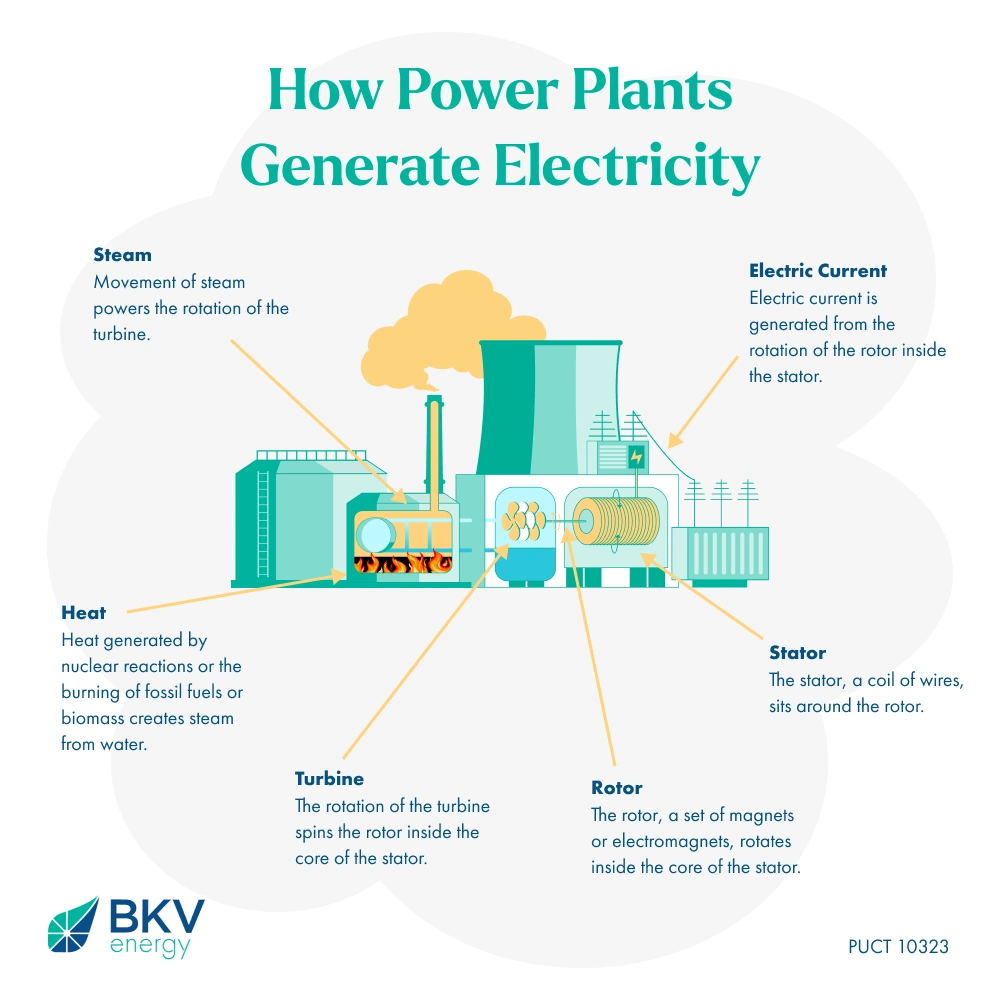
Where does most electricity come from? Currently, most of the world’s electricity is produced by thermal power plants that burn fossil fuels such as coal, oil, or natural gas to heat water and produce steam. The steam then drives a turbine connected to an electric generator, converting the mechanical energy into electricity.
Hydroelectric power plants can use the energy from flowing or falling water to drive a turbine connected to a generator. The kinetic energy of the moving water is converted into mechanical energy in the turbine and then into electrical energy in the generator.
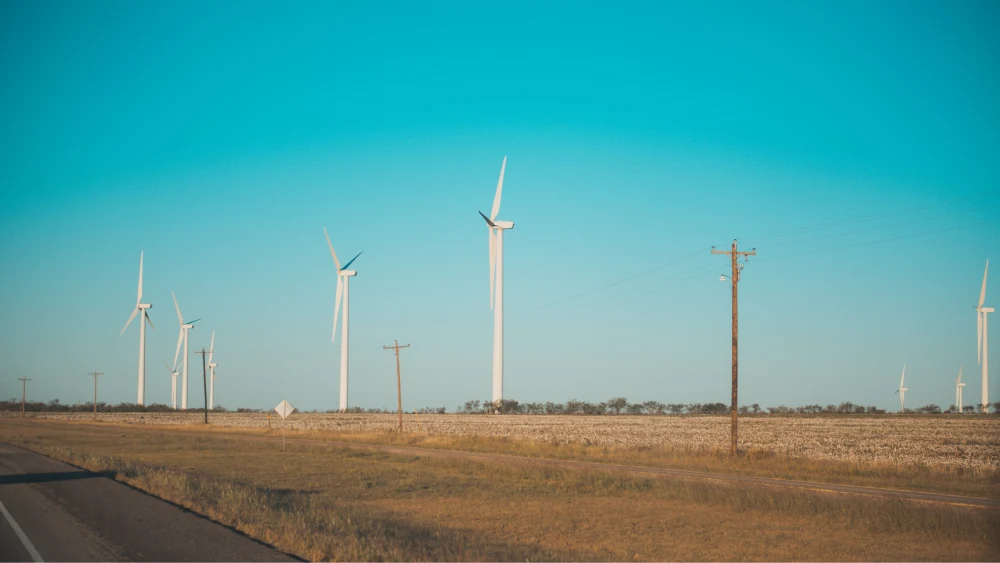
Wind turbines convert the kinetic energy in wind into electrical energy. As the wind turns the blades of the turbine, the mechanical energy generated drives an electric generator.
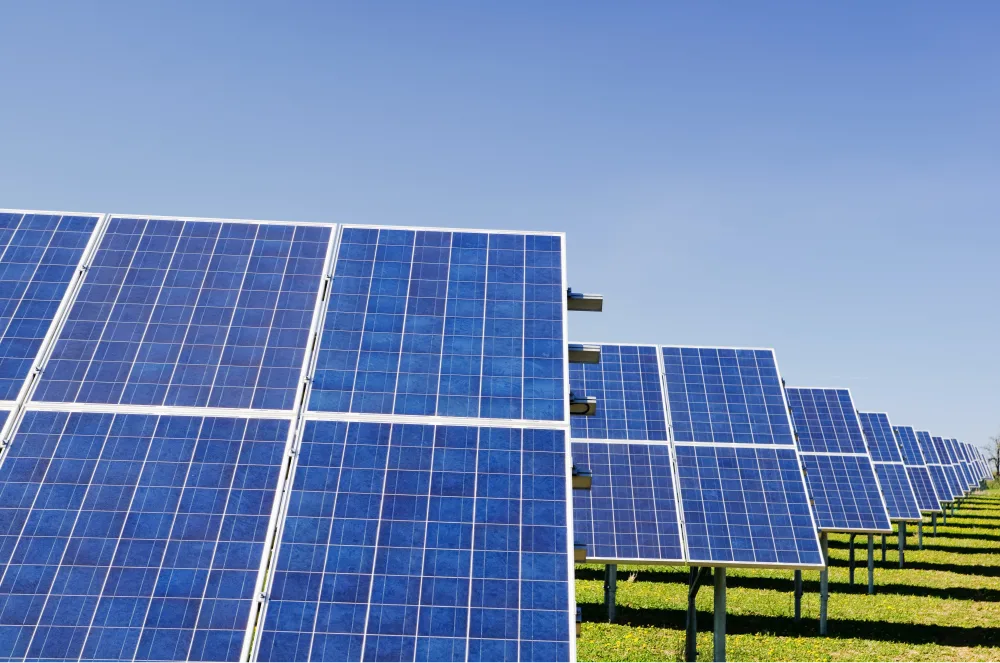
Solar power plants convert sunlight directly into electricity using photovoltaic (PV) cells. When sunlight hits the PV cells, electrons are knocked loose and flow through the cells, generating an electric current.
In nuclear power plants, nuclear reactions release energy in the form of heat, which is then used to produce steam from water. The steam drives a turbine connected to an electric generator, converting the mechanical energy into electricity. Currently, nuclear power plants are powered by fission reactions (splitting atoms), but scientists are working hard to generate consistent electricity using fusion reactions (combining atoms).
Geothermal power plants generate electricity by tapping into the Earth’s internal heat. They use hot water or steam from the Earth’s interior to produce electricity to drive a turbine connected to an electric generator.
Biomass power plants burn organic materials such as wood, agricultural waste, and animal waste to produce steam. The steam drives a turbine connected to an electric generator, which generates electricity by converting the mechanical energy into electricity.
This includes both wave power, which uses the energy from waves to generate electricity, and tidal power, which uses the energy from rising and falling tides.
Each method has advantages and disadvantages in terms of cost, environmental impact, scalability, and reliability. The choice of method depends on factors such as the availability of resources, the specific needs of the region, and government policies.
Once you know how electricity is generated, it’s important to understand that emerging technologies play a pivotal role in shaping the future of electricity generation.
With advancements in materials science, engineering, and technology, newer and more efficient methods of generating electricity are continually being developed. These novel technologies are not only more efficient but also hold the potential to drastically reduce the environmental impact of energy production.
Tidal power plants use the regular rise and fall of coastal tides to generate electricity. On the other hand, wave energy converters capture the energy of ocean waves, using the up-and-down motion of waves to generate electricity.
Hydrogen fuel cells convert chemical energy from hydrogen into electricity, emitting only water vapor as a byproduct. This clean technology holds promise for various applications, including power generation.
Globally, fossil fuels, predominantly coal, have been the leading sources of electricity. However, with rising concerns over climate change, technological advancements, and policy shifts, renewables are making significant strides.
In the United States, for example, the electricity landscape has evolved over time. Historically reliant on coal power, the country has seen a substantial shift towards natural gas electricity generation and renewables, particularly solar and wind power.
Within countries, the primary source of electricity can also vary by region due to factors like resource availability, energy policies, and infrastructure development. Thus, when pondering, “Where does my energy come from?” it is essential to consider regional variations.
There are many environmental considerations to generating electricity, especially when power is created using fossil fuels like coal, oil, and natural gas.
Fossil fuel-powered energy creation leads to greenhouse gas emissions, air pollution, and other forms of environmental destruction.
As the global community grapples with climate change and ecological degradation, the transition to cleaner, renewable sources of energy is becoming increasingly crucial.
The shift towards renewables not only reduces carbon emissions but also minimizes other adverse environmental impacts. Wind and solar power, for instance, have a significantly lower environmental footprint compared to fossil fuels.
Humanity faces many challenges in generating enough electricity for homes and businesses around the world, including costs, intermittency, infrastructure, and environmental impact. As we transition to a sustainable energy future, it’s important that we address these numerous challenges.
Electricity generation is not free. We must invest in fuels, infrastructure, and research. Although the costs of renewables have decreased dramatically, they can still be higher than fossil fuels in some cases. Continued investment in research and development is needed to drive down costs further.
Solar and wind energy are intermittent sources of renewable generation, meaning they are not always available. Solar panels cannot work without sunlight, and wind turbines are dependent on weather conditions.
There are two ways to handle intermittency of wind and solar: utility-scale battery storage and supplementation with nonrenewable power generation.
When solar and wind generate more power than we need during the day, that power can be stored in utility-scale batteries, to be later released to the grid when wind and solar go offline. At the same time, natural gas, coal, oil, and nuclear power plants can fill in the remaining demand gaps.
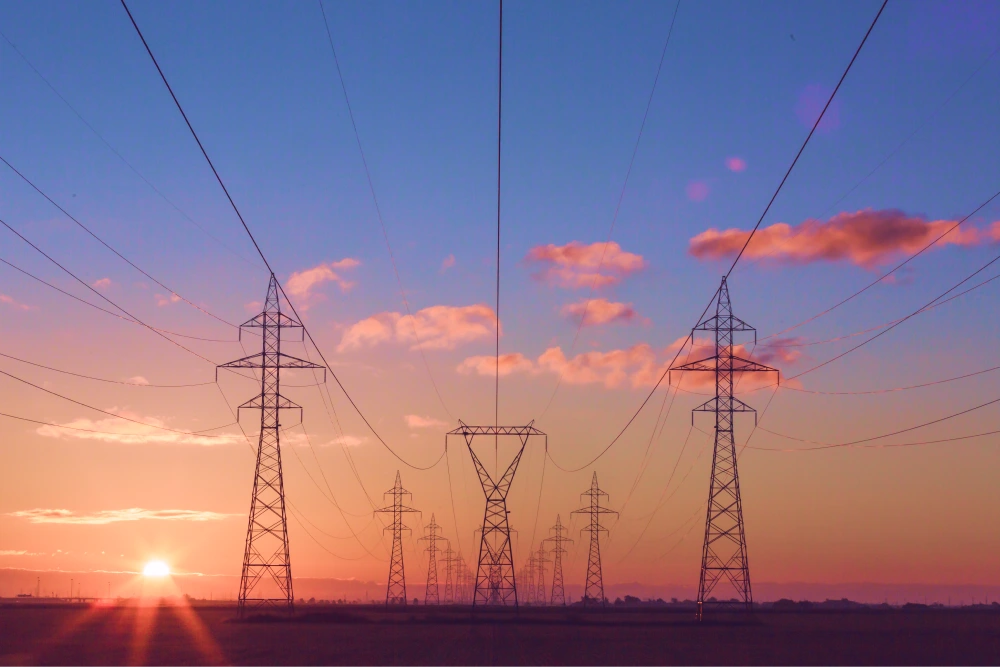
Transitioning to renewable energy often requires substantial investments in new infrastructure, including power plants, transmission lines, and storage facilities.
Despite these challenges, the transition to renewable energy offers numerous benefits, including environmental preservation, energy security, and job creation.
Government policies and regulations play a crucial role in shaping the world’s electricity and generation landscape. They influence the adoption of renewable energy sources, the development of new technologies, and the overall direction of the energy sector.
Governments worldwide have implemented policies to promote renewable energy sources like wind, solar panels, and hydropower. These policies include tax incentives, feed-in tariffs, and renewable portfolio standards (RPS).
For example, the Investment Tax Credit (ITC) in the United States provides a tax credit for solar energy systems, significantly reducing the cost for homeowners and businesses. Feed-in tariffs guarantee a fixed price for electricity generated from renewable sources, making it more competitive with fossil fuels.
RPS, adopted in many states in the US, require electric utilities to source a certain percentage of their electricity from renewable sources. These policies have been instrumental in increasing the adoption of more renewable energy resources.
Carbon pricing, either through carbon taxes or cap-and-trade systems, is another policy tool used by governments to reduce greenhouse gas emissions. By putting a price on carbon, these policies incentivize the reduction of fossil fuel use and promote cleaner energy sources.
For example, the European Union’s Emissions Trading System (ETS) has helped reduce emissions by capping the total amount of greenhouse gas companies can emit.
Emission regulations, such as the Clean Air Act in the United States, set limits on pollutants like sulfur dioxide and nitrogen oxides emitted by power plants. These regulations have led to the retirement of many coal-fired power plants and spurred investment in cleaner energy sources.
Government support for research and development (R&D) is essential for advancing new energy technologies. Grants, tax credits, and public-private partnerships can help drive innovation in areas like energy storage, smart grids, and advanced nuclear reactors.
For example, the US Department of Energy’s Advanced Research Projects Agency-Energy (ARPA-E) funds high-potential, high-impact energy technologies that are too early for private-sector investment.
Some governments have deregulated electricity markets to increase competition and drive down prices. In deregulated markets, consumers can choose their electricity provider, leading to more renewable energy options. However, deregulation can also pose challenges, such as price volatility and the need for robust oversight to prevent market manipulation.
Government policies and regulations significantly impact the electricity generation landscape. By promoting renewable energy, reducing emissions, supporting R&D, and fostering competition, governments can help shape a more sustainable and resilient energy sector. Balancing the needs of consumers, industry, and the environment is essential for achieving a successful energy transition.
As we analyze the electricity generation trends, energy consumption patterns, and other electricity generation statistics, it is crucial to understand the broader context in which these changes are occurring. The transition to a more sustainable and reliable energy system involves addressing challenges like energy security, affordability, and environmental sustainability while meeting the growing electricity demand. Keeping this context in mind, let’s look closely at each.
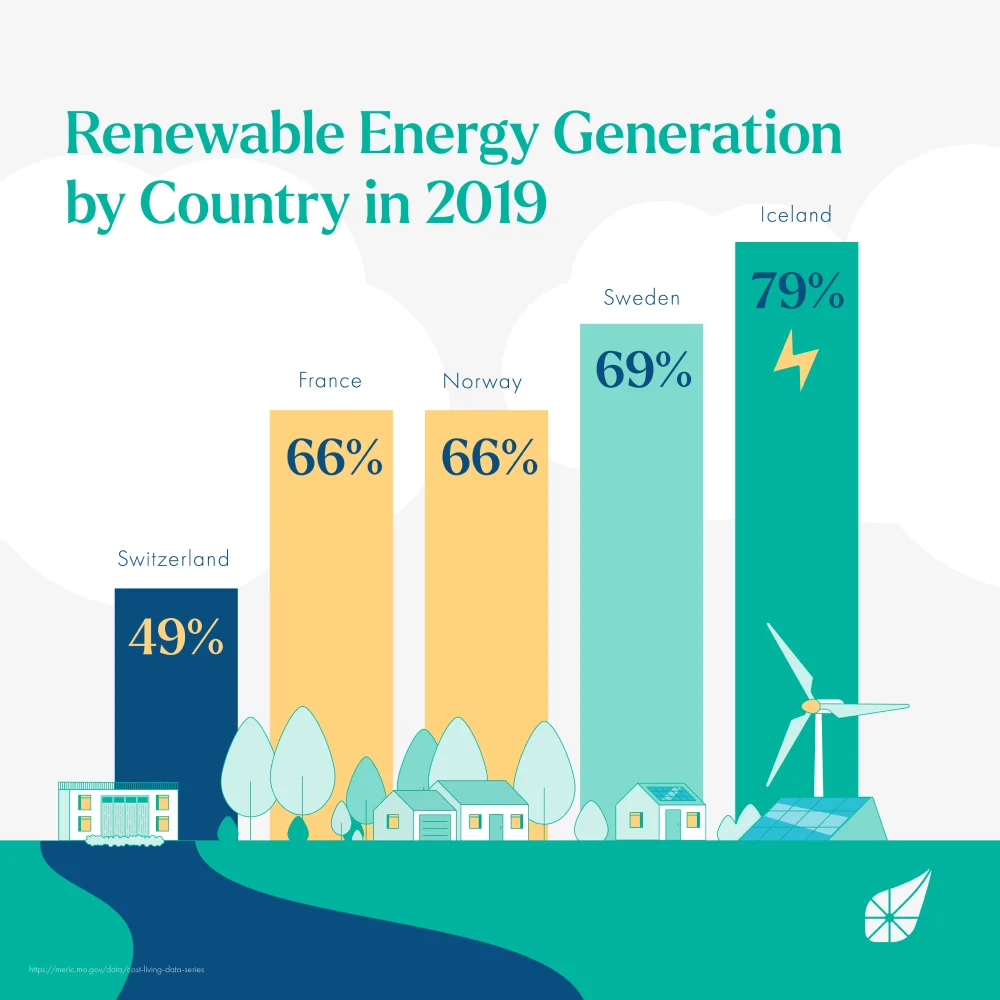
There has been a significant shift towards renewable energy sources like wind, solar, and hydropower for electricity generation. As of 2022, renewables accounted for nearly 30% of global electricity generation, according to the International Energy Agency (IEA).
Electrification of various sectors, such as transportation and heating, has been a global trend. Electric vehicles and heat pumps have become more popular, increasing the demand for electricity.
Industry remains a significant consumer of electricity, particularly in sectors like steel, chemicals, and mining.
In the residential and commercial sectors, lighting, appliances, and cooling are the primary electricity consumers. There has been a trend towards greater energy efficiency in these areas.
Here are some interesting statistics around global electricity generation.
According to the IEA, global electricity generation in 2024 was around 31,256 Terawatt-hours (TWh).
For context, the average Texas home uses about 1,200 kWh per month. One terrawatt-hour is equivalent to 1 billion kilowatt-hours.
| Year | Global Electricity Generation (TWh) |
|---|---|
| 2024 | 31,256 |
| 2023 | 29,925 |
| 2022 | 29,188 |
| 2021 | 28,548 |
| 2020 | 27,033 |
| 2019 | 27,147 |
| 2018 | 26,783 |
| 2017 | 25,738 |
| 2016 | 24,984 |
| 2015 | 24,315 |
Hydropower is the largest source of renewable electricity in the world, followed by wind and solar.
In 2024, the world generated 9,868 Terrawatt-hours with renewable energy sources.
| Year | Renewable Energy Generated Globally (TWh) |
|---|---|
| 2024 | 9,868 |
| 2023 | 9,006 |
| 2022 | 8,529 |
| 2021 | 7,948 |
| 2020 | 7,500 |
| 2019 | 7,023 |
| 2018 | 6,660 |
| 2017 | 6,233 |
| 2016 | 5,853 |
| 2015 | 5,501 |
Coal-fired electricity generation is decreasing in the United States, but globally, it’s increasing.
| Year | Electricity from Coal, Global (TWh) | Electricity from Coal, U.S. (TWh) |
|---|---|---|
| 2024 | 10,544 | 652 |
| 2023 | 10,401 | 675 |
| 2022 | 10,243 | 832 |
| 2021 | 10,156 | 898 |
| 2020 | 9,438 | 773 |
| 2019 | 9,827 | 965 |
| 2018 | 10,033 | 1,149 |
| 2017 | 9,655 | 1,206 |
| 2016 | 9,328 | 1,239 |
| 2015 | 9,284 | 1,352 |
The contribution of gas-fired generation to global electricity generation continues to increase. United State natural gas power plant production is increasing as well.
| Year | Natural Gas Electricity, Global (TWh) | Natural Gas Electricity, U.S. (TWh) |
|---|---|---|
| 2024 | 6,900 | 1,870 |
| 2023 | 6,716 | 1,806 |
| 2022 | 6,630 | 1,687 |
| 2021 | 6,557 | 1,579 |
| 2020 | 6,382 | 1,624 |
| 2019 | 6,401 | 1,586 |
| 2018 | 6,225 | 1,469 |
| 2017 | 5,974 | 1,296 |
| 2016 | 5,850 | 1,378 |
| 2015 | 5,540 | 1,333 |
Nuclear power generation is not growing as quickly globally or in the United States in the same way that fossil fuel and renewables are.
Globally, nuclear power generation increased from 2023 to 2024 by about 100 TWh, while in the United States in increased by about 7 TWh. Nuclear power in the U.S. has decreased since 2019.
| Year | Nuclear Power Generation, Global (TWh) | Nuclear Power Generation, U.S. (TWh) |
|---|---|---|
| 2024 | 2,778 | 781 |
| 2023 | 2,699 | 774 |
| 2022 | 2,639 | 771 |
| 2021 | 2,762 | 779 |
| 2020 | 2,648 | 789 |
| 2019 | 2,754 | 809 |
| 2018 | 2,658 | 807 |
| 2017 | 2,594 | 804 |
| 2016 | 2,571 | 805 |
| 2015 | 2,532 | 797 |
The generation of electricity is a multifaceted process that involves diverse sources and technologies. Understanding the intricacies of electricity generation provides valuable insights into the current energy landscape and the path toward a sustainable future. As the world seeks to address climate change and transition to cleaner energy sources, the choices we make regarding electricity generation will shape the future of our planet.
BKV Energy, as a key player in the Texas energy sector, plays a crucial role in this transition. You can contact the helpful team at BVK Energy anytime to get more information, discuss your electricity needs, and learn about our energy plans.